
How a Pulitzer Prize Winner Reached New Readers (Twice): The David Maraniss Case Study

Updated: Mar 16
Author: David Maraniss
Books: A Good American Family: The Red Scare and My Father & Path Lit by Lightning: The Life of Jim Thorpe
Challenge: Reach beyond existing readership to attract new audiences for two very different books
Results: Both books became New York Times bestsellers, beat industry benchmarks by 20-50% on every platform, launched successful podcast, Path Lit by Lightning named Amazon Editor's Pick in Best Biographies & Memoirs
The Challenge

David Maraniss didn't need to prove his credentials. As a Pulitzer Prize-winning journalist and New York Times bestselling author, he'd already established himself as one of America's finest storytellers.
But A Good American Family presented a unique challenge. The book explored the McCarthy era through the lens of his own family's history—his father's experience being targeted during the Red Scare. It was deeply personal, historically significant, and relevant to contemporary political conversations. Yet in a crowded media landscape, how do you reach readers who don't already follow your work?
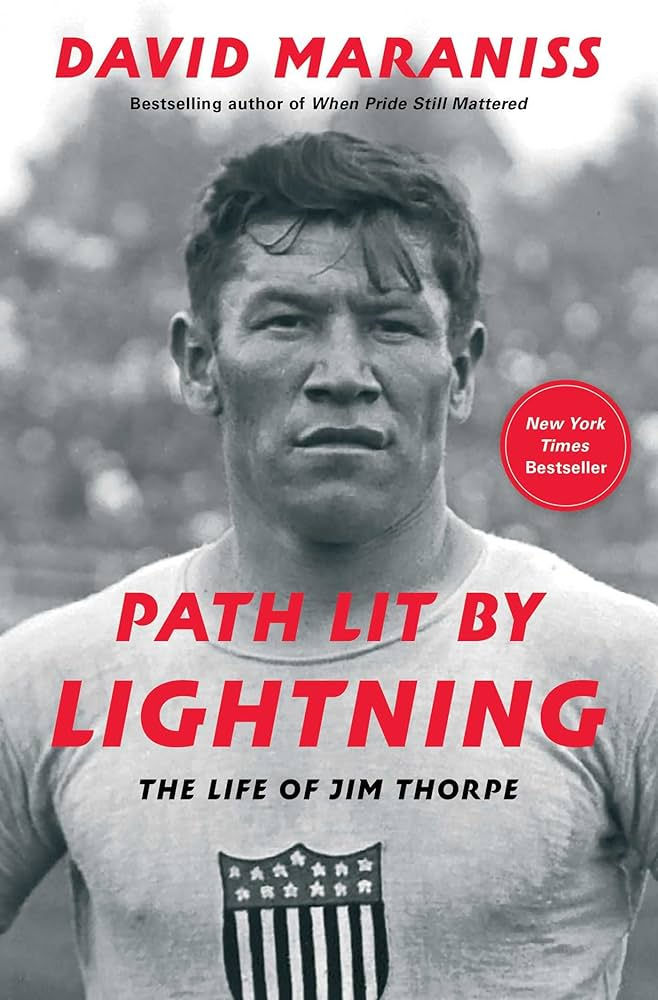
(Later, Path Lit by Lightning: The Life of Jim Thorpe would present an entirely different challenge: reaching sports fans, Native American communities, and biography readers drawn to legendary American figures—audiences that might not overlap with his previous work.)
For both books, David needed a strategy that would:
Define his brand for readers who'd never heard of him
Identify and reach new audience segments beyond political history buffs
Build a community of engaged readers and advocates
Create lasting connections that extended beyond a single book launch
The Strategy: Know Your Audience, Then Serve Them
We started with a fundamental question: Who needs this book right now?
Through audience research and testing, we identified five distinct reader segments:
Patriots drawn to American history and values
Writers interested in craft and storytelling
History buffs fascinated by the McCarthy era
Political enthusiasts connecting past to present
Book clubs seeking meaningful discussion topics
Each segment needed different messaging, different content, different reasons to care.
Content That Resonates
We developed a content plan tailored to each audience segment's specific interests:
For history buffs: Deep dives into McCarthy-era details and primary sources
For political enthusiasts: Connections between past Red Scare tactics and contemporary politics
For patriots: Content highlighting American values and democratic principles
For writers: Behind-the-scenes insights into Maraniss's research and writing process
For book clubs: Discussion guides, thematic questions, author Q&A content
This wasn't about creating generic "buy my book" posts. It was about giving each audience something valuable that naturally led them to want to read A Good American Family.
Smart Platform Strategy
We ran targeted campaigns across multiple platforms—organic and paid—testing what resonated with each audience segment. Key tactics included:
Precision targeting: We created detailed advertising profiles for each segment, allowing us to allocate budget efficiently and measure what actually drove results.
Cross-platform testing: Rather than assuming which platforms would work, we tested Facebook, Instagram, Twitter (now X), and targeted digital advertising to see where each audience segment actually engaged.
Optimization based on data: We continuously refined messaging, creative, and targeting based on performance metrics, doubling down on what worked and cutting what didn't.
Results: Cost-per-result (CPR) beat industry benchmarks by 20-50% on every platform. That's not just good. That's exceptional efficiency that allowed us to reach more readers with the same budget.
Building Community: The "Ink in Our Blood" Podcast
Here's where the strategy went beyond typical book marketing.
We launched "Ink in Our Blood," a podcast co-hosted by David and his daughter Sarah. The show explored family stories, journalism, writing craft, and the themes that run through David's work.
Why a podcast?
Deepened connections with existing readers who wanted more from David
Extended brand reach to podcast listeners who might not have discovered his books otherwise
Created evergreen content that continues to attract new readers long after the book launch
Positioned David as not just an author, but a voice in the broader cultural conversation
The podcast became more than a marketing tool. It became a valuable educational resource, a way for David to connect with his audience more personally, and a platform that supports all his work, not just one book.
Multiple seasons have followed, and the podcast continues to introduce new readers to David's entire body of work.
Engaging Key Communities
We didn't just advertise to individuals. We built relationships with communities:
Academic circles studying McCarthy-era history
Journalism schools and professional organizations
Writing communities interested in narrative nonfiction
Political advocacy groups connecting historical lessons to current issues
By engaging these communities authentically—sharing knowledge, participating in discussions, offering value—we created advocates who championed David's work within their networks.
The Results
Efficient audience growth: CPRs 20-50% below industry benchmarks across all platforms meant we reached significantly more readers per dollar spent.
Podcast success: "Ink in Our Blood" launched successfully and continued for multiple seasons, creating ongoing connections with readers and attracting new audiences.
Community of advocates: Strategic engagement with academic, journalism, and writing communities built a strong base of supporters who organically recommended David's work.
Expanded reach: David's readership grew beyond his traditional political history audience to include writers, educators, and readers who connected with the personal family story.
Long-term brand building: Rather than a one-time book launch spike, the strategy created sustained visibility and engagement that supports David's entire body of work.
When Strategy Works, Authors Come Back
Here's the best validation of a marketing approach: David came back.
For his next book, Path Lit by Lightning: The Life of Jim Thorpe, we applied and evolved the same strategic principles—but for a completely different audience and subject matter.
Where A Good American Family spoke to patriots, political enthusiasts, and history buffs interested in the McCarthy era, Path Lit by Lightning needed to reach:
Sports fans and Olympic history enthusiasts
Native American communities and advocates
Biography readers drawn to legendary American figures
Educators teaching American history and social justice
Same author. Different book. Different audiences. Same strategic approach: understand who needs this book, meet them where they are, serve them with valuable content.
The results: Path Lit by Lightning became a New York Times bestseller and was named an Amazon Editor's Pick in Best Biographies & Memoirs.
That's what happens when you build a repeatable strategy rooted in understanding, not templates. David knew from experience that the approach worked. We knew how to adapt it for his new book. And readers got to discover another incredible story from one of America's finest biographers.
What This Teaches Us About Author Marketing
The David Maraniss case study—across two very different books—illustrates several principles that work for any author:
Audience segmentation matters. "Everyone who likes history" is not an audience. Five distinct reader types with different motivations is. And those audiences will be completely different for your next book—which is fine if you have a repeatable strategic process.
Platform follows audience. Don't assume where your readers are. Test, measure, optimize.
Content should serve, not just sell. Each audience segment got valuable content tailored to their interests, which naturally led them to the book.
Community building beats broadcasting. Engaging with journalism schools, academic circles, writing communities, sports historians, and Native American advocacy groups created advocates who championed David's work authentically.
Think beyond the launch. The podcast strategy created lasting value that continues to attract readers years later.
Efficiency = reach. Beating industry benchmarks by 20-50% meant reaching thousands more readers with the same budget.
Strategy that works once should work again. David came back for Path Lit by Lightning because he knew the approach was sound. Same strategic process, different audiences, equally strong results.
The Bigger Picture: Where The Playbook Actually Started
Here's something I don't talk about enough: David Maraniss was my first author client. He was the genesis for everything that became The Playbook.
I wasn't calling it "The Playbook" then. But working with David taught me something fundamental: every author needs a customized strategy that understands their unique book, their specific audiences, and their individual strengths. Generic templates don't work. Cookie-cutter advice fails.
What David needed for A Good American Family—audience segmentation, platform-specific testing, community building, long-term thinking—became the foundation for how I approach every author project now. His success proved that when you truly understand an author's work and serve their readers authentically, the results follow.
That's what The Playbook is built on. Not theory. Not best practices copied from someone else's blog. Real strategy developed from actually helping authors succeed.
David Maraniss's case wasn't just a client success story. It was the moment I realized there was a better way to do author marketing—one rooted in genuine understanding, strategic thinking, and a commitment to being helpful.
That's what being helpful looks like in author marketing. Not tricks. Not hacks. Strategy rooted in genuine understanding of your audience and a commitment to serving them well.
Want marketing strategy that actually understands your book and your readers? Get your custom Playbook →
Questions about reaching new audiences for your book? Drop them in the comments. That's what we're here for.


Comments